
How to write a first novel
If I’d been a writer all my life, why was I still not a writer?

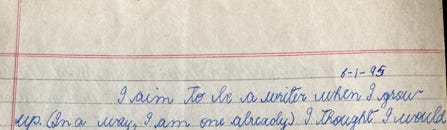
In a diary I’d kept decades ago, the first entry, for 6 January 1995, says “I am to be a writer when I grow up. (In a way I am one already.”) I was thirteen.
I was a week short of 43 when my first book was published in 2024. First novel. First traditionally-published book.
Because child Unmana was not self-aggrandizing. I made up stories to myself as a toddler. When I learned to write, I started writing some down. I started getting published in Assam’s leading English daily—the kids’ section, of course—when I was eight, and in a couple of years my stories started appearing on the Fiction page instead, and I even got paid—not much, but I got paid like a Real Grown-Up Writer. Still, it took a friend to point out the obvious: I still remember the moment, we were chatting in the classroom, I was ten or eleven, and she talked about what she wanted to be when she grew up. Then she said to me, “You’ll become a writer, won’t you?” I had never thought about that before. But I nodded. She was right.
Maybe I hadn’t thought of becoming a writer because I didn’t know you could become a writer. That it could be your profession, not just something you did. To be honest, I’m not quite sure of that yet: because I’m far from earning a living. But I have one very real measure of success: a published book.
I didn’t think it would take me three decades. Thirty more years: child Unmana would have thought that unbearable.
And still I wonder at how easily I might not have got here.
It wasn’t that I’d given up on my dream, exactly. I had a few teen detective stories published by Writer’s Workshop in 1999 (which is essentially self-publishing; my father paid for a number of copies to get the deal). I kept writing. But then I became a grown-up, moved away from Assam to Delhi and then Pune and then Mumbai, got busy with earning a living, with figuring out who I was as a person, with managing disabilities. I kept writing, once in a while. I had a blog, I wrote stories, I started novels. But now it was never enough, never good enough. I submitted a few times, and usually didn’t hear back. I went to a couple of workshops, got discouraging feedback. I had no writer friends. I had no one to ask what to do next. There was no MFA in India, and I couldn’t afford to go abroad; even the idea of the paperwork required for an application was daunting. And to be honest, my writing wasn’t very good. I didn’t know what was missing. I lost all confidence.
I quit my job, told my husband I’d take a year off, finish my MA in English Literature that I’d been doing via correspondence, work on my writing. I had a project in mind then, a novel. I hadn’t written much yet, but the idea was looming in my head. with my time off, between studying and freelance assignments, I started to write. I didn’t tell anyone, not even my husband.
Then I saw that a writer I was (and am) a fan of, Anjum Hasan, was starting a writing course in Bangalore with two other writers. It was ten weeks, and I lived in Mumbai. I went, stayed with friends, attended classes on weekends, tried to write during the week. It was one of the best decisions of my life, right up there with marrying my husband, similar in its magical serendipity.
For thriller writer Zac O’Yeah’s class, I wrote a fiction scene about three women who ran a small tour company in Bangalore. Instead of shying away from my quirks, my inadequacies, I leaned into them: the main character is queer, reads and talks about novels all the time, is grumpy and lazy and antisocial. I referenced novels I’d read about Bangalore. I made silly puns.
Zac suggested I develop the scene into a novel. I was flattered, but didn’t take the suggestion seriously at first. I had that other novel I was trying to write, my main project. I couldn’t write another novel, not when all I had was three characters and an office I’d set them in. Could I?
I began to want to. My characters—the nerdy, fat lesbian, the pragmatic and charming boss she’s attracted to, their young, loud colleague—had taken up residence in my head. I could see the room they worked in, I could see the building with the bookstore upstairs, I placed it in the neighbourhood I stayed in at the time, with its parks and quiet lanes. I remembered a mystery novel I’d started writing and abandoned a few years ago, and picked up the bare bones of the plot: a business owner found dead in the stairwell by the protagonist. His family and employees are suspects.
I came back to Mumbai with a deadline from Zac: six months. I didn’t meet it, just like I didn’t meet any of the other deadlines he gave me over the years. But how encouraging to have a deadline, to have someone believe that not only could I write this, I could write it quickly! (I did send him the manuscript in about eight months.)
He did more: he introduced me to editors, to agents. I got my publisher on my own—I emailed in response to their open call and my now-editor wrote back almost immediately expressing interest—but without Zac constantly reassuring me it would work out, his belief that I had written something good, something worth publishing, I would have given up long ago.
Sometimes I think I wouldn’t have started if I’d known it was so hard. Over seven years, I did so many rewrites and revisions. I worked on the novel over and over, revising it in response to feedback and my own misgivings. I kept turning it over in my hands like a jewel, polishing it till I had a shape that worked, till it shone brilliantly.
I was full of despair right before the end: I went back to Bangalore to research and get more of a sense of place in response to my agent’s feedback: only she hadn’t agreed to be my agent yet. It felt like my last chance, like everything was on the line. I didn’t know if I could do it: I didn’t know how to research, how to write fiction based on research. Between my job and writing and stress, my chronic pain got worse. I quit my job. I was afraid I would never write again.
But I finished the revision, slowly, painfully, over a few months, sometimes writing by hand and asking my husband to type it up because typing sent little jolts of pain up my arm. And this time, it worked. I got my publisher.
And in retrospect, I’m glad I put in the work. It’s a much better novel for it, and also, it taught me how to write. I finished my second novel, and I’m working on a third, and a fourth, and a fifth. I am lucky: my husband’s income has been steadily increasing and we don’t need me to earn for now. Physiotherapy and yoga and working few hours have kept my pain in check, and in fact I’m fitter and stronger than ever.
I’ve been doing events and other promotions since the book came out, and sometimes feeling anxious about my book not selling enough, about it reaching readers. It feels incredible, literally, to have my book out in the world, weird jokes and all. I meet people sometimes who’ve actually read my book. I feel terribly exposed, like I’m coming out of hiding.
And I feel real, like I exist as a person doing something in the world. I feel like I’ve got permission to keep writing, and that’s really all I ever wanted.
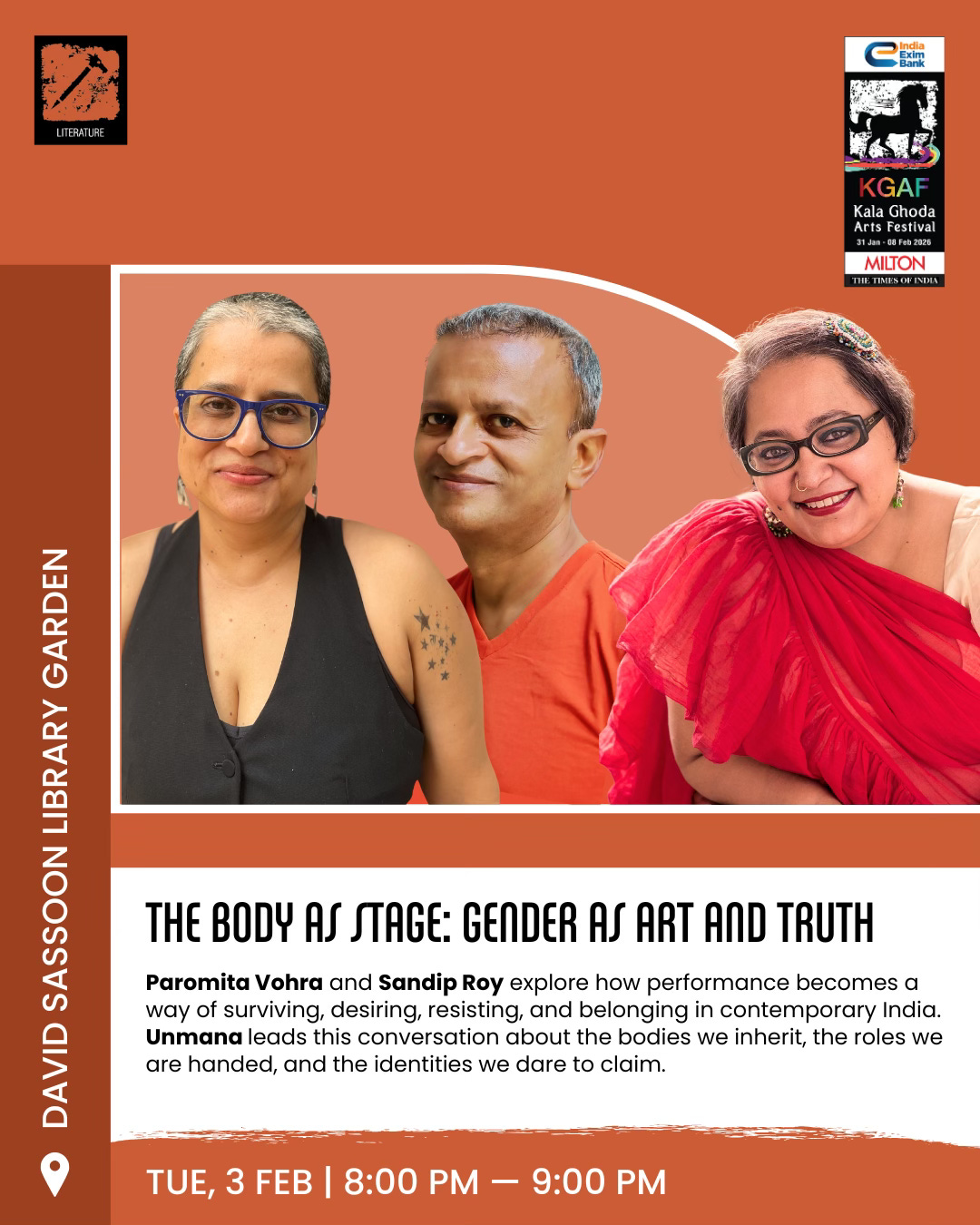
Event announcement: If you’re in Bombay, on 3 February, I’ll be at Kala Ghoda (David Sassoon Library) at 8:00 pm - 9:00 pm moderating the session The Body as Stage: Gender as Art and Truth. “Paromita Vohra and Sandip Roy explore how performance becomes a way of surviving, desiring, resisting, and belonging in contemporary India. Unmana leads this conversation about the bodies we inherit, the roles we are handed, and the identities we dare to claim.”
congrats! as someone who also “manifested” being a writer in their teenage diary this gives me a lot of inspiration